
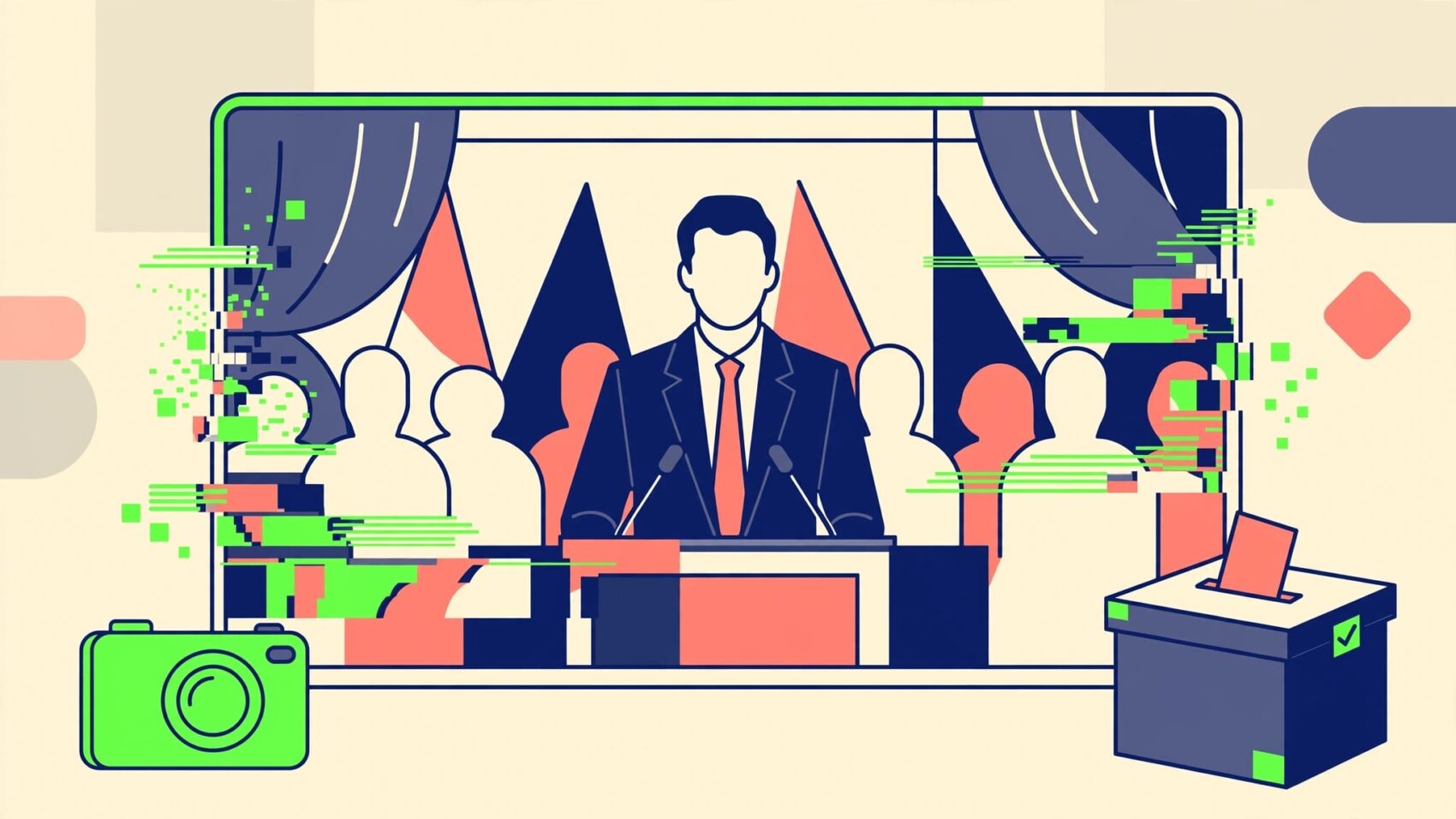
AI political ads could prompt regulation when AI-generated content shows realistic footage of a real person doing something that never happened. A deepfake scene differs from a fabricated spoken statement, a distinction Don and Cuyler debate in Episode 179 of MOCK the Podcast.
When you’re watching a 30-second commercial, you aren’t checking every shadow for signs of manipulation. That trust problem becomes harder to untangle when political advertising already spends so much time attacking the other person.
Key Takeaways
- Synthetic political video can falsely suggest that a real person took part in an event, even when the ad invents no spoken words.
- Federal campaign-ad disclosures exist, but federal law has no comprehensive AI-specific rule for every political ad. State laws vary.
- Cuyler identifies the 2028 presidential election as a possible point of pressure for new rules, but the discussion does not predict that regulation will happen.
- Any new rules would need to address deceptive media while protecting political expression, including satire and parody.
Why Political Ads Keep Attacking the Opponent
As a graphic design and advertising agency, we usually start with a positive proposition: what does this product do, which problem does it solve, and why should someone choose it?
Political advertising often takes another approach. Instead of explaining why a candidate deserves support, the message becomes an argument against the opponent. The Wesleyan Media Project is a research project that tracks political advertising, including attack ads. Don and Cuyler see that pattern across both sides of the aisle.
Fear has always played a role in political messaging. Still, they remember the 2008 election as a time when candidates spent more energy explaining why voters should choose them.
The discussion also separates branding from strategy. Copying the visual style of a successful political identity doesn’t reproduce the reasons people supported that candidate. A recognizable logo and appealing merchandise only do so much.
Why Competitor Attacks Can Look Desperate
The brand comparisons start with Miller Lite’s “Tastes great, less filling” positioning and move to the Pepsi Challenge.
Cuyler remembers seeing Pepsi’s blind taste-test setup at Six Flags. His reaction was skepticism: how many people who preferred Coke had disappeared from the final presentation?
That’s his impression, not evidence of a campaign’s results. But it explains why comparison advertising can feel like a gimmick.
Don’s observation is that Pepsi brings up Coke far more readily than Coke brings up Pepsi. A brand that projects confidence doesn’t appear preoccupied with its rival.
That distinction carries into advertising strategy. An attack may attract attention while leaving the audience without a strong reason to choose the advertiser.
AI Video Changes What a Political Ad Can Show
The conversation compares two approaches in Georgia: ads centered on a candidate’s personal background and an ad that uses synthetic video to mock an opponent.
The AI example places a recognizable political figure in hair- and nail-salon scenes the person never filmed. Artificial intelligence, including generative artificial intelligence, can create scenes like these. The footage supports a criticism about grooming expenses without inventing spoken words.
A synthetic political ad can misrepresent someone’s actions without inventing a single line of dialogue.
That distinction matters because viewers don’t examine campaign ads frame by frame. Even people who work with AI can struggle to tell whether footage is genuine.
The salon setting may make the joke apparent, but a deepfake can still suggest that an event happened when it didn’t. This is the broader risk of deceptive synthetic media: realistic images can present fabricated scenes as real.
Why Political Advertising Could Prompt AI Rules
Cuyler points to 2028 as a potential pressure point for AI political ads regulation. AI video could improve substantially over two years, and a presidential election attracts more attention than individual state races.
He doesn’t expect one midterm cycle alone to produce a legislative response.
Political advertising already has disclosure requirements. Viewers hear who approved or paid for an ad. Under federal campaign-finance law, “electioneering communication” is a defined category of broadcast, cable, or satellite ads about federal candidates near an election. It isn’t a casual synonym for every campaign ad.
State laws vary, and proposed rules must be distinguished from enacted requirements. Some election deepfake laws target materially deceptive media under specific conditions. Federal law has no comprehensive AI-specific rule for every political ad.
Any new rule must balance preventing deception with First Amendment protections for political expression, including satire and parody. A clearly identified AI disclaimer could tell viewers when an ad uses synthetic audio or video.
Don’s more practical observation is that politicians may act once the technology affects them directly.
The discussion also identifies AI-generated pornography as another possible source of legislative pressure. Neither argument establishes that regulation will happen. Both concern situations where convincing synthetic depictions could make inaction harder to defend.
Subscription Fatigue Adds Another Layer of Distrust
The conversation then turns to ownership. Software, music, and entertainment increasingly require recurring payments rather than a purchase that stays yours.
Adobe becomes a pointed example. Cuyler describes its AI marketing as dismissive of longtime professional customers: designers helped sustain the products, then watched the company promote tools that appeared to promise anyone could do their jobs.
He acknowledges that AI can make design work easier. His objection concerns how Adobe presented it.
We also discuss an AI-assisted, open-source alternative to Adobe tools. For a student, a free product that handles much of the needed work can sound attractive without matching every professional feature.
Meanwhile, Sony and PlayStation bring up another frustration: whether buying digital content means owning it or retaining access under someone else’s terms. The broader concern is customer backlash when companies keep demanding more while giving customers less control.
AI Changes the Agency Conversation, but Files Still Matter
One client asked how integrating Claude should change the agency relationship. The question concerned moving beyond individual tasks toward problem-solving and rapid prototyping.
That’s a meaningful distinction in what advertising agencies do today. Generating a presentation or an early concept doesn’t settle whether the work is ready for production.
Don’s point is practical: AI can produce something that looks presentable without delivering a finished production file. Cuyler adds that much of its output still needs human intervention before anyone can use it.
They also recognize how quickly capabilities improve. The old jokes about AI getting hands wrong already feel dated to them. Cuyler predicts that fully functioning websites with clean back ends are getting closer.
Neither treats that prediction as proof that finished creative work no longer needs people.
Personalized Entertainment Could Narrow What We Discover
Don’s concern about AI-generated entertainment is personal: he doesn’t want a sci-fi movie created only for him.
Part of art’s appeal is encountering something another person made that you wouldn’t have chosen for yourself. A song, painting, or film can introduce an interest you didn’t know you had. Personalized generation could reduce those encounters and the shared experiences around them.
Cuyler connects that concern to film economics. He recalls Matt Damon’s explanation that DVD purchases and rentals once gave films another way to recover costs after their theatrical run.
Without that revenue, expensive marketing becomes harder to justify for smaller films. Studios have more reason to favor recognizable properties that can fill theaters.
The discussion also touches on AI performers and the questions they raise about hiring and union membership. For both hosts, cheaper generated entertainment doesn’t automatically mean more interesting entertainment.
Don and Cuyler Don’t Agree on How Far This Goes
Cuyler worries that AI could leave people less capable while exposing them to greater risks. He raises concerns about deceptive system behavior and access for hackers or terrorists.
The financial incentive troubles him, too. Companies may see an opportunity to reduce their workforce before giving enough attention to the consequences.
Don shares concerns about learning and dependence. Their discussion includes classroom technology, students outsourcing papers, and the prospect of paying a subscription to access knowledge instead of developing it.
They acknowledge useful everyday applications. However, Cuyler doesn’t see conveniences such as generating a presentation as sufficient compensation for the risks he fears.
Their disagreement concerns what comes next. Cuyler believes development has become difficult to redirect. Don leaves more room for guardrails and isn’t ready to accept the bleakest outcome.
Frequently Asked Questions
How can an AI political ad mislead viewers without inventing dialogue?
A synthetic video can place a recognizable person in a scene they never filmed. The footage can imply that the event happened even if it contains no fabricated spoken words.
Do current federal rules cover every AI political ad?
No. Political ads have disclosure requirements, and federal campaign-finance law defines certain electioneering communications. Federal law does not have a comprehensive AI-specific rule for every political ad, and state laws vary.
Why does the discussion point to 2028 as a possible pressure point?
Cuyler expects AI video to improve over the next two years, and a presidential election draws more attention than individual state races. He doesn’t say that regulation is certain or that one midterm cycle would produce a law.
What would new rules need to balance?
Rules would need to address deceptive synthetic media while protecting First Amendment rights for political expression, including satire and parody. A clearly identified AI disclaimer could tell viewers when an ad uses synthetic audio or video.
The Pressure Point Is Believable Fabrication
Political advertising gives the AI debate a concrete focus: convincing footage of a real person in a scene that never happened. Existing disclosure rules and lawmakers’ personal exposure could make campaign ads a pressure point for regulation.
That’s a possibility, not an outcome. Any future law would need to specify enforcement and remedies, with choices such as a private right of action, civil penalties, or injunctive relief. The central issue is trust: synthetic media gives advertisers more ways to make a claim feel real without showing something that occurred.
About The Author





Comments are closed.