
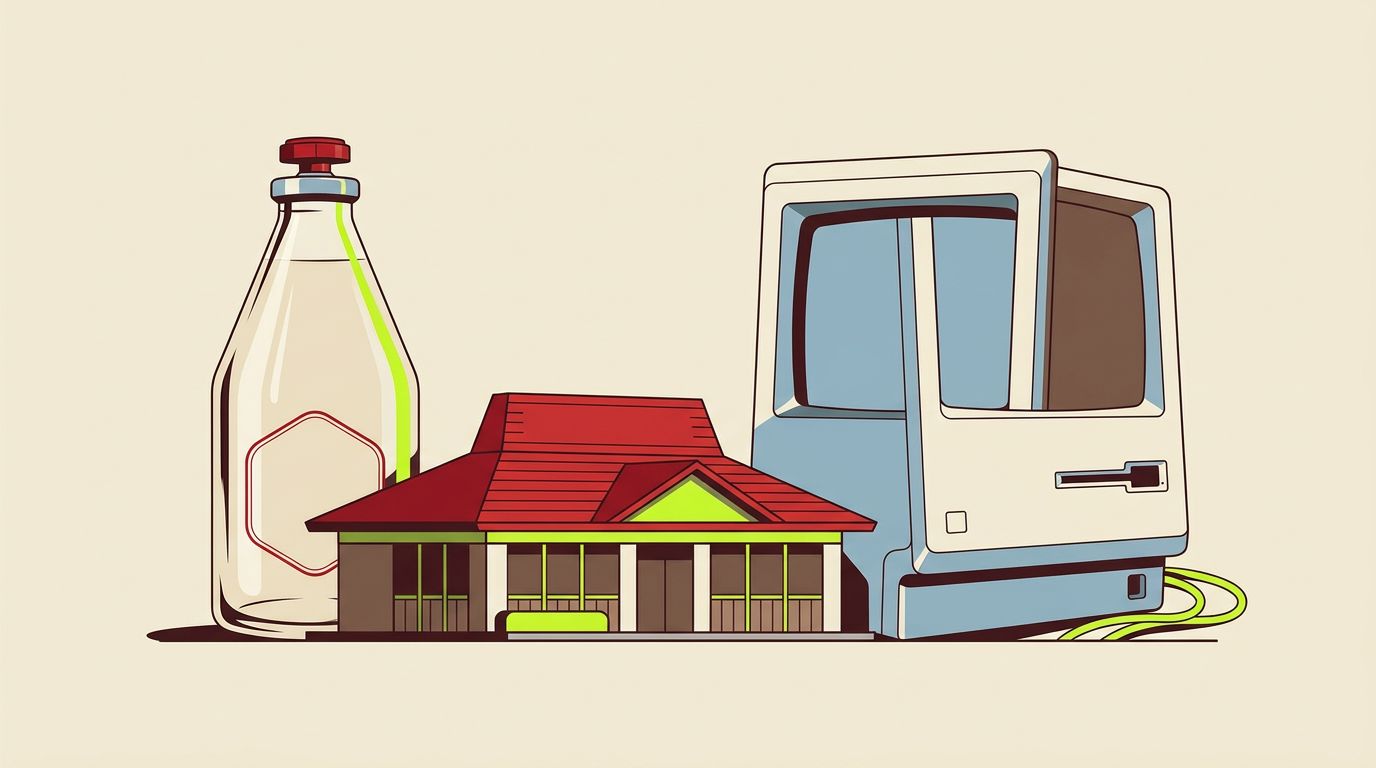
A familiar brand can lose momentum without losing everything people remember about it. If you’re responsible for one, the hard part is knowing what still works and what needs to change. Old Spice, Pizza Hut and Apple took different routes back, which makes their stories more useful than a single rule about nostalgia.
In episode 176 of MOCK the Podcast, Don and Cuyler start with an Iron Maiden concert and follow the comeback story into advertising, design and products.
Iron Maiden’s 50th anniversary started the conversation
Don took his kids to see Iron Maiden on the band’s 50th anniversary tour. He’s been a fan since he was a teenager, though the band had already been around long before he discovered it. He even owns a signed copy of its first LP.
The show impressed him because the band could still deliver after decades together. Iron Maiden had its biggest years, went through quieter stretches and kept playing. That prompted Don and Cuyler to think about brands with similar histories: household names that peaked, lost ground and later found an audience again.
Old Spice kept its identity and changed its image
Cuyler’s mother remembers Old Spice as her father’s brand. Cuyler remembers wearing its blue deodorant as a kid because its strange, irreverent commercials made it feel cool. To his mother, he smelled like his grandfather. To him, Old Spice was the fun brand on the shelf.
The hosts point to the absurdity of the ads, including centaurs and Terry Crews’s shirtless appearances. Product names such as “Swagger” added to that playful impression. Yet Old Spice kept familiar cues, including its logo, colors and distinctive whistle. They also recall the original scent as much the same.
Old Spice changed what younger customers associated with the brand while keeping much of what made it recognizable.
For Don and Cuyler, that’s the distinction. Advertising and product presentation gave an old name a different personality. Old Spice didn’t need to discard every part of its past to reach people who hadn’t grown up with it.
Hostess returned with the snacks people remembered
Don was stunned when Hostess went bankrupt and reports suggested Twinkies might disappear. A brand that had been a fixture of his childhood suddenly seemed uncertain. He remembers Hostess ads in the comic books he read in the 1970s and 1980s, especially for fruit pies.
The products later returned under the familiar Hostess name and look. The hosts don’t pin the bankruptcy on a particular cause, but they do consider the difficulty of selling an indulgent snack during a period when healthier food was getting more attention. A Twinkie wasn’t going to become a health product through new packaging.
That leads them to McDonald’s. They see room for lighter menu choices, while noting that those choices aren’t what most people go there to buy. Familiarity helped Hostess on its return because people already knew what its treats were.
Burger King and Pizza Hut revisited their older looks
Some of the fast-food comebacks Don and Cuyler discuss involve design as much as the menu. They note that Burger King and Pizza Hut returned to earlier visual styles after years when logos across many categories took on sharper, sportier looks. Burger King, Fanta and Doritos all come up as examples of that period’s design tastes.
Pizza Hut brought back memories of dining in
For the hosts, Pizza Hut nostalgia extends well beyond its logo. They remember red-roof restaurants, buffets, salad bars and the red, pebbled cups that came with a sit-down meal. Cuyler says he could happily revisit a Pizza Hut pizza buffet from 1997.
They see the push toward those older restaurant cues as part of a broader appetite for childhood experiences, especially among millennials. Their point is about what those details recall for them, not a claim that every customer wants a return to the past.
Burger King comes up in another context, too. The hosts recall its ad showing a burger left to grow moldy. They also discuss how the chain has sometimes embraced the fact that customers come for a Whopper, rather than trying to present fast food as a health meal.
McDonald’s has taken a different route
Don contrasts those retro returns with the modern McDonald’s restaurants he sees being built. The playgrounds he remembers are largely absent, and the newer spaces look nothing like a deliberate return to an earlier era.
Cuyler points out that the golden arches have changed in their details over time. Still, the arches have remained the center of the identity. Burger King and Pizza Hut changed more of their visual components before looking back to older versions.
Apple’s comeback came through products
Don remembers a time when Apple computers felt like the odd choice. He recalls the company’s attempts to compete more directly with PCs through Power Macintosh computers and licensing, before Steve Jobs returned and Apple’s fortunes changed.
The hosts associate that return with colorful Macs and, later, the iPod, iPad and iPhone. Apple went from a struggling computer brand in their memories to a company whose phones became central to everyday life.
For Don, a smartphone first became necessary because of email. When he spent a day on a photo shoot, he could return to a backlog of messages he hadn’t been able to check. A phone that handled email changed that routine. It also helped create an expectation of faster replies, including the familiar text asking whether he’d seen an email.
Cuyler remembers how different the iPhone felt: nearly the whole device was a screen, and it carried music alongside calls and messages. He sees that screen-first approach in newer cars, too. The hosts remain Apple users, though they question whether some more recent product ideas offer a similarly useful change.
BlackBerry shows what happens when the market changes
Before the iPhone, BlackBerry was the phone Cuyler wanted. He owned several. Its physical keyboard and mobile email made it easy to stay connected, and the “CrackBerry” nickname captured how attached people became to the devices.
Then the iPhone offered a different combination: a large touchscreen, a keyboard on that screen and music in the same device. BlackBerry’s keyboard had been a strength, but the hosts remember the market moving toward something else. They mention later attempts by BlackBerry to return, without treating them as a comeback on Apple’s scale.
Their memories of Windows 98, slow music downloads and the bulky computer in an early Sopranos scene underline how quickly those expectations changed. Apple and BlackBerry each held a strong position at one point. Only one of them became central to the next version of the phone.
A brand comeback doesn’t always start with a new logo
Old Spice refreshed its image largely through advertising. Apple changed the products people used. Burger King and Pizza Hut drew on older designs and experiences, while Hostess returned with familiar treats and packaging. The hosts see room for all of those approaches.
For MOCK, a graphic design and advertising agency, the distinction between brand strategy and visual identity and advertising campaign creative is relevant to the conversation. A brand can change how it speaks to people while keeping its logo, as Old Spice did. It can also decide an older visual identity is worth bringing back.
Don and Cuyler close by noting that some brands do need design help. MOCK offers that work, and brands considering it can get in touch for a free consultation.
What lasts beyond the comeback
Iron Maiden’s anniversary show gave Don a reminder that a long run includes quieter years. The brand examples tell a similar story, but their returns didn’t all look alike.
The strongest thread is knowing what people still value. Sometimes that means keeping a scent, a snack or a logo. Sometimes it means making a product that changes what people expect from the brand altogether.
About The Author




Comments are closed.