
You can remember AOL’s door-slamming sound and still be surprised the brand exists. Some companies survive by changing their business; others keep finding new customers for the same familiar experience.
In episode 177, Don and Cuyler of MOCK, a graphic design and advertising agency, discuss brands they can’t believe have lasted. Their conversation starts with the early internet, when AOL seemed to be everywhere.
AOL and Yahoo Outlasted Their Internet Moment
AOL wasn’t a minor player in the internet boom. It bought Time Warner, a deal one host remembers from working at Turner when Time Warner bought Turner, before AOL bought Time Warner.
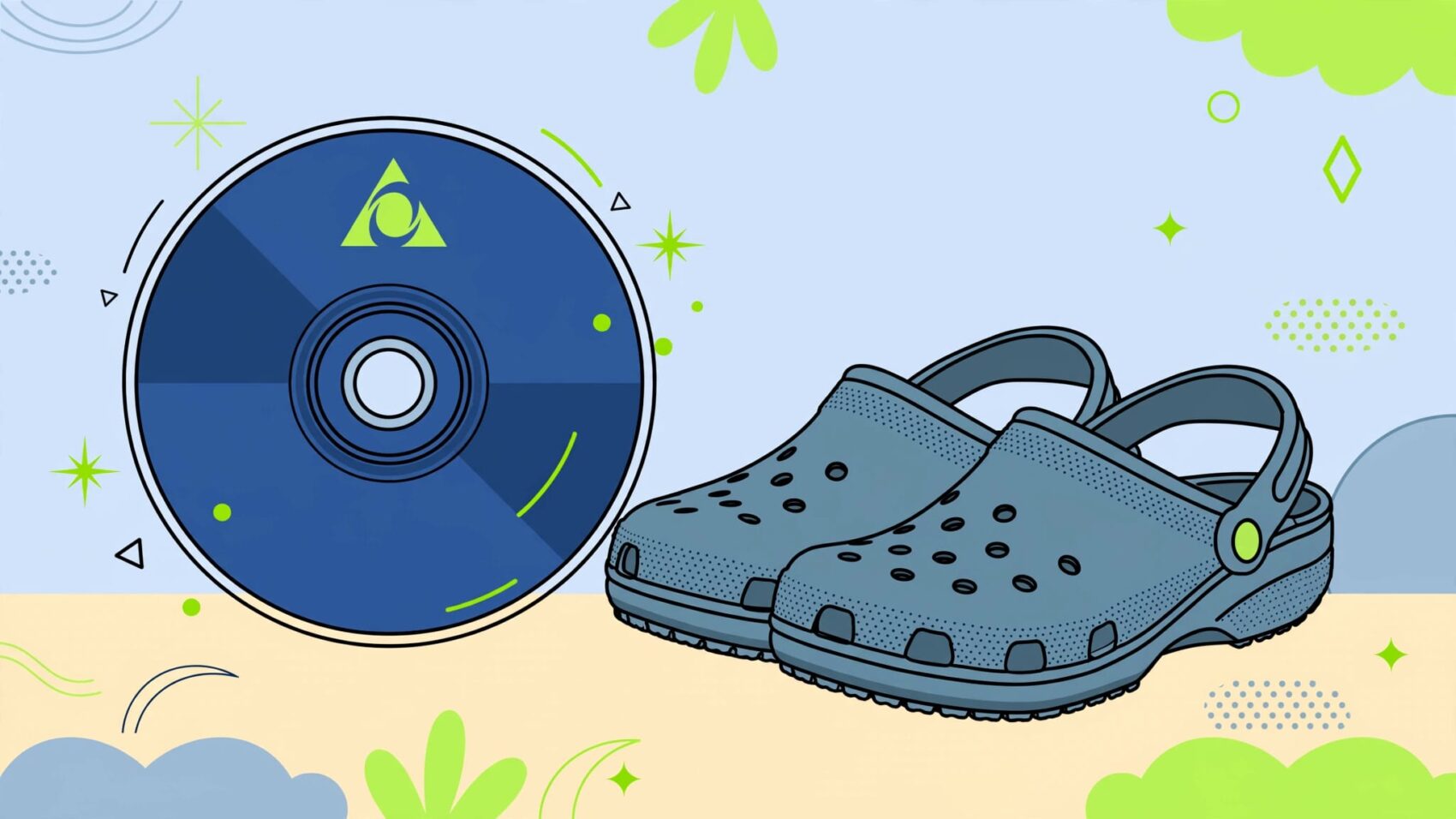
Yet the memories that make AOL’s survival feel strange are more personal. Its promotional CD-ROMs filled shelves, including at Blockbuster. For kids, AOL Instant Messenger was a place to chat before texting became an everyday habit.
You came home, checked who was online, and heard a door open or slam as people arrived or signed off. AOL even had early chatbots, although the hosts remember them being pretty bad.
Yahoo prompts the same disbelief, with Yahoo Finance getting a nod as an enduring part of the business. Meanwhile, Netscape’s fall after Internet Explorer’s rise reminds them how quickly internet dominance could disappear.
MySpace Offered a Different Kind of Social Experience
Before MySpace, Cuyler remembers using LiveJournal. Then MySpace became the place everyone wanted to be, partly because users could put their own song on their page.
The hosts also recall Justin Timberlake’s involvement in buying MySpace. What initially sounds like a terrible purchase becomes a different story when Cuyler recalls that it later sold for more money.
That leads to a speculative comeback: perhaps MySpace could return by showing people only the friends and accounts they chose to follow, in reverse chronological order, with ads included.
Don likes Bluesky, but doesn’t see it as the answer to that idea. He thinks users are tired of feeds deciding what they should see.
Algorithms Can Narrow a Feed Almost Immediately
A friends-only feed has a drawback, though. If your friends rarely post, you run out of things to see.
Cuyler describes himself as a social media spectator. He mostly watches, shares videos and memes, and occasionally joins conversations about Braves baseball. Both hosts miss Twitter’s earlier appeal for news and sports.
His Instagram group chat provides a concrete example of algorithmic influence: friends send only hot dog-related memes, and anything unrelated earns a reprimand. AI-generated content is also unwelcome.
Within a day or two, he estimates that about 60% of his feed was hot dog content. They argue that spending a day interacting with bowling posts would produce a similar flood of bowling material.
Their alternative is an algorithm-free feed, perhaps chronological or randomized, rather than another recommendation system.
Alexa Lost Its Appeal as an Everyday Helper
Alexa once felt like the obvious holiday gift. Now, one host still has the device at home but struggles to see its purpose.
His complaints are practical: finding information online feels difficult, and playing music feels restrictive without Amazon Music. Asking a question on a phone or using Google seems easier, especially as Google’s search experience increasingly includes AI.
The other host uses Apple HomePods mainly for music. He doesn’t ask them for the weather, and he turns off some Siri features because unexpected interruptions annoy him.
For them, Alexa illustrates how a once-exciting device can remain in the house after its usefulness fades.
Napster Kept the Name and Changed the Business
Napster comes up as a more complete reinvention.
During the conversation, the hosts find it presenting itself around visible AI agents that users can see, talk to, and create with. That’s a long way from the peer-to-peer music-sharing service they remember.
Their reaction is straightforward: the name remains, but they’re looking at a different business. Survival doesn’t necessarily mean preserving what originally made a brand famous.
Crocs Outlasted the Two-Year Prediction
When Crocs appeared, Don expected them to last about two years. Instead, he now sees more people wearing them and unexpected styles, including boat shoes.
The conversation covers kids wearing Crocs to the pool and chefs wearing them in kitchens. Comfort is the hosts’ main explanation for their staying power, although one admits he’s never tried a pair.
Cuyler’s brother-in-law is an enthusiast. He calls moving the heel strap forward or backward switching between “front-wheel drive” and “four-wheel drive.” His kids wear them too, complete with decorative charms.
Birkenstocks offer a comparison. The hosts remember mocking them when they were younger; now, they see them as widely accepted. Doc Martens also enters the discussion as a brand with cycles of popularity.
JCPenney Survives Among Crowded Shopping Options
A familiar name in a struggling mall
Don remembers his grandmother calling JCPenney “Penney’s.” He can’t believe it’s still operating while so many familiar department stores have closed locations or faded.
The hosts acknowledge that JCPenney has closed plenty of stores. Still, one describes a nearby, run-down mall where almost everything closed except JCPenney, which occasionally comes in handy.
They struggle to identify what makes it distinct. Marshalls, TJ Maxx, Ross, Target, and Kohl’s already compete for shoppers. Meanwhile, Zara, H&M, Abercrombie, Express, and Hollister add more choices.
Online shopping and name recognition come up as possible explanations, not established answers. So does a less serious theory: grandmothers buying Christmas gifts.
Kmart had a memorable ad, too
Kmart provides a contrast. Beyond its blue light specials, the hosts remember the funny “Ship My Pants” commercial.
They praise both the joke and the strategy: customers could order online instead of visiting a store. Even an excellent campaign, they point out, couldn’t save Kmart.
Chuck E. Cheese Gets a New Generation of Birthday Kids
The invitation travels through friends
Children still come home asking to visit Chuck E. Cheese. One host held a child’s birthday gathering there the previous year and couldn’t quite believe he was back.
The hosts suspect word of mouth matters more than advertising. A child attends a friend’s party, then wants the same experience.
Chuck E. Cheese may benefit from each new group of children wanting a birthday party there once.
They also recognize the difficulty of a business that might get only one birthday visit from each child.
Beer changes the parent’s experience
The biggest surprise during that visit was beer. The pizza also earned a better-than-expected grade, although the host later clarified that he wouldn’t choose it over other pizza for delivery.
An animatronic stage was present but never activated. The gathering wasn’t a formal birthday package requesting the mascot, either.
Instead, the children ran around using game cards and collecting tickets while the adults managed the noise and activity. Pizza and beer made that experience easier to settle into.
Chuck E. Cheese appearing on Uber Eats surprised the other host. Their beer discussion also prompted memories of finding a place to get a drink at Disney.
Buffets and Cruises Make the Survival List
The conversation briefly extends to buffets, including Cicis Pizza, and their continued existence after COVID.
Cruises draw similar disbelief. The hosts mention troubling news stories and people falling overboard, while acknowledging that they know people who love cruise vacations.
These are more examples of their central reaction: a familiar business keeps attracting customers even when they can’t understand the appeal.
A Surviving Name Can Mean Different Things
Napster’s new business and Chuck E. Cheese’s next birthday crowd show two different kinds of brand survival. One changes what it sells; the other finds new children who want a familiar experience.
The hosts don’t settle on a single explanation for every holdout. A name can outlast its original moment without disappearing, even when the people who remember that moment can’t quite believe it.
About The Author



Comments are closed.