
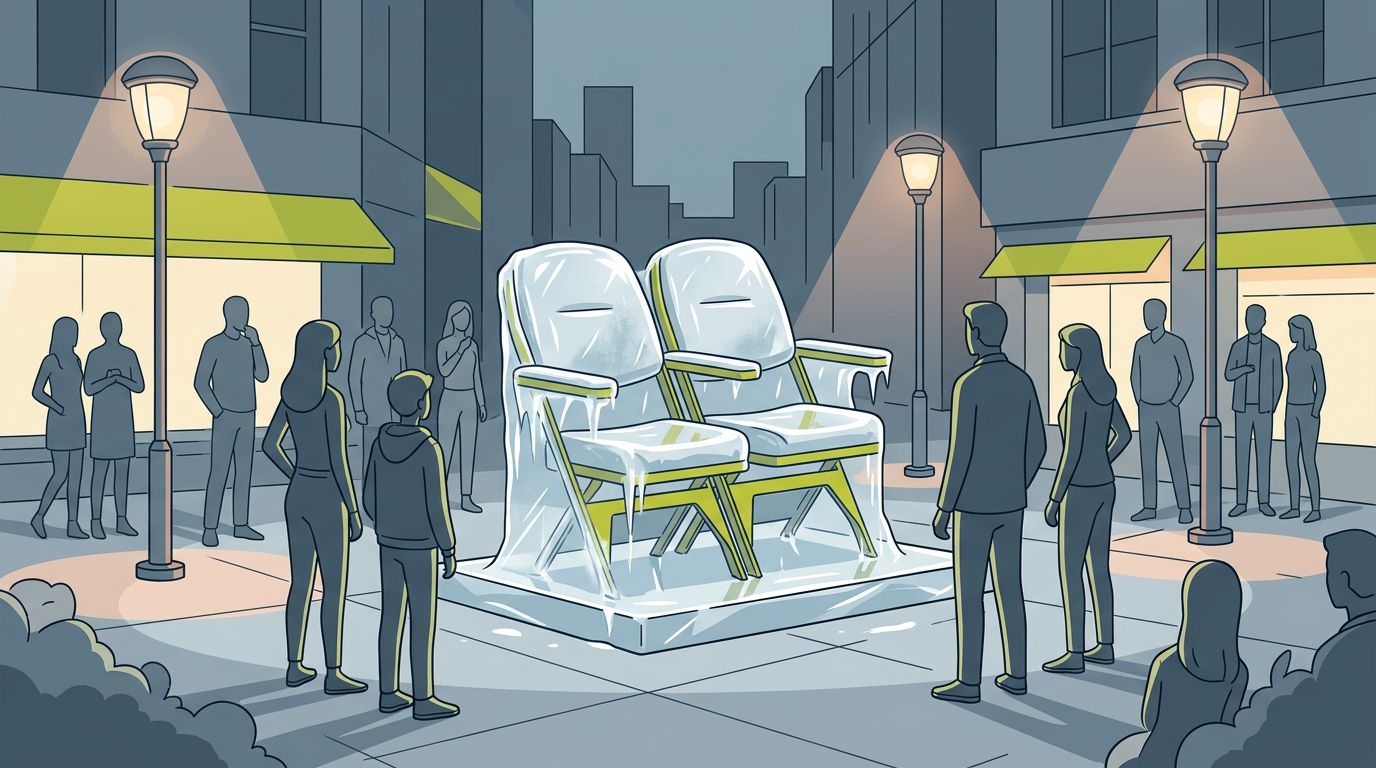
A marketing stunt featuring a frozen pair of courtside seats can pull more attention than a polished ad campaign. After a quick detour into tiny heads, flat-bill hats, and glasses, Don and Rob land on a sharper point: the simple marketing stunts people remember often happen out in public, not inside a media dashboard.
That matters if you’re tired of spending into the same social media channels as everyone else. The best stunts are simple, visual, and easy for people to share, which is why they still punch above their weight in viral marketing.
Key Takeaways
- Simple, visual publicity stunts in public spaces—like Drake’s frozen seats or Smile‘s grinning actors—create instant mystery and shareable moments that outperform polished ads.
- Audience participation drives free content creation, turning one-time events into viral stories, as seen with ice-breaking crowds and copycat smiles.
- Big brands and small businesses alike benefit by tying clear, low-risk ideas to real goals, avoiding panic while maximizing earned media and organic buzz.
- Clarity trumps big budgets: easy-to-grasp visuals and behaviors in familiar places generate attention that feels authentic and travels far.
Drake and Smile prove simple ideas travel far
Drake and the horror film Smile offer standout publicity stunt examples of how minimal effort creates massive buzz.
Drake’s frozen seats and melting reveal
Drake’s album rollout for Iceman is a clean example of how little you sometimes need to do. It started with his usual courtside seats at a Toronto Raptors game, except this time they looked frozen solid and sat empty. There was no long explanation and no heavy copy. Because he’s such a visible presence there, the image carried the message on its own.
That first move did two jobs at once. It created a mystery for people in the arena and a perfect image for TV and social. A stunt like that doesn’t need much setup when the setting already has cameras on it.
Then the campaign expanded into downtown Toronto with a giant block of ice, roughly 25 feet tall, holding the album release date inside. People showed up with hammers, pickaxes, and even blowtorches to break through it. Influencers joined in, audience participation drove the crowd’s content creation for free, and the final reveal gave everyone a second reason to post.
What makes this strong is its restraint. The visual matched the album title, the audience understood it in one glance, and the stunt moved from public space to online chatter without losing the point.
Smile turned one facial expression into a media event
The horror film Smile used the same logic in a different way. Actors appeared at baseball games, basketball games, and morning shows, dressed plainly and staring into the camera with the film’s eerie grin. They did not wave, perform, or explain anything. They sat there and held the expression.
That worked because the image was unsettling enough for broadcasters to keep finding it, generating widespread media coverage and viral moments. Viewers saw it, wondered what was going on, and then started copying it themselves. The campaign stretched because the audience could participate with almost no effort.
For a movie studio, that is a small spend compared with a giant ad buy. Yet the reach was huge because the behavior itself became the ad.
These publicity stunts prove simple ideas travel far.
Why big brands still bother with stunts
One of the strongest points in the discussion is that giant brands keep doing this even when they do not need to. Drake could post an album date to Instagram. A studio could pour more money into trailers. Tinder could stay inside the app. Yet these brands still go physical because public attention works differently when people encounter something unexpected in a familiar place.
Tinder’s garbage truck stunt, a clever example of experiential marketing, is a good case. The company wrapped trucks with breakup-themed copy and invited people to throw away their ex’s stuff. The messaging leaned into the joke with lines about emotional distress inside and an “EX-press” style pun. It turned a basic city vehicle into a moving billboard that people could not ignore, generating substantial earned media.
These campaigns also blur the line between PR and advertising as part of a smart PR strategy. They promote a product, but they also create a story that boosts brand awareness and that other people want to cover. That is why they travel so well. Media outlets get something visual to talk about, and the brand gets attention that feels more organic than a standard ad placement.
The same idea shows up in pop-ups and public installations. Glossier built hype and social media buzz with temporary retail moments. Sneaker drops still create long lines because scarcity plus place creates buzz. Severance used a glass-box installation in New York, with cast members performing office routines in public view, which turned a show promo into a live event.
Red Bull has built years of brand identity this way with publicity stunts. The Stratos jump, where a skydiver leapt from near-space, was expensive and massive. Its soapbox races and Flugtag events are looser, funnier, and more repeatable. For any Graphic Design & Advertising Agency, that is the appeal of creative campaigns: one strong idea can feed paid, earned, social, and live media at the same time.
Surprise is useful, panic is not
Not every marketing stunt deserves praise. Cartoon Network learned that the hard way when promotional light boards for Aqua Teen Hunger Force were mistaken for possible explosives. Authorities responded, bomb squads got involved, and public fear replaced the joke. Awareness went up, but so did the cost of the mistake.
The same tension shows up in smaller ways, too. One April Fools’ gag involved running the same cartoon for 24 hours straight. Some viewers may have found it funny once they got the joke. Cable operators and customer service teams had to deal with angry calls from people who thought something was wrong.
A room divided is better than a room ignored, but a room in panic is a different problem.
That is the line good stunt work has to respect. A brand can confuse people for a minute. It should not frighten them, waste public resources, or punish partners.
Lighter-weight stunts often age better because the stakes are low and the joke is clear. Coors Light turned a misspelled word in its own advertising into a follow-up gag. IHOP temporarily became IHOB to promote burgers. Wendy’s played the same game with “Tendy’s” to push chicken tenders, showcasing these creative marketing ideas.
Those low risk high reward moves did not require giant builds or risky public installations. They worked because people could understand the twist instantly. In other words, the line between PR and marketing barely matters here. If the idea gets people talking and points back to the product, it is doing its job.
What small businesses can copy from the Polly campaign
The most useful example in the episode did not come from a celebrity or a global brand. It came from a campaign for Southern Polytechnic State University’s Southeastern Regional Robotics Championship, serving as a blueprint for small business marketing. The team created a retro-style robot named Polly and built a story around the idea that Polly had escaped campus.
One part of the campaign framed Polly as a missing robot. Another gave the robot its own voice and presented it as looking for work. Flyers went up around town. Videos extended the narrative. Then Polly showed up in costume at Dragon Con, which was the perfect setting for crowd reactions and photos. The six-week build ended at the robotics event itself.
That campaign worked because it employed strategic storytelling to give people something to follow, not simply something to notice. The robot had a personality, the school had a problem to solve, and the final appearance tied the story back to the event being promoted.
The lesson for small businesses is simple:
- Pick one clear image, behavior, or character to drive brand engagement.
- Make it easy for people to join, share, or spot in public with low-cost tactics.
- Tie the stunt to a real business goal, not a random joke.
That is where creative campaign development matters. A stunt travels farther when the live idea, the content plan, and the follow-up media all point to the same message. If your team is weighing a launch idea against another round of standard media, get in touch for a free consultation.
Frequently Asked Questions
Why do simple stunts outperform big ad campaigns?
Simple stunts are visual, public, and shareable, creating mystery and participation without heavy explanation. They leverage existing crowds and cameras, like Drake’s frozen courtside seats, for instant buzz. This organic reach beats paid media by feeling unexpected and fun.
How can small businesses use stunts like the Polly campaign?
Pick a clear character or image, build a short story with low-cost tactics like flyers and videos, and tie it to a business goal. Polly’s ‘escape’ engaged the community and drove event attendance. Focus on easy sharing to amplify without big spends.
What’s the line between surprise and panic in stunts?
Surprise confuses briefly then delights, like IHOP’s IHOB rebrand, sparking talk without harm. Panic, like the Aqua Teen bomb scare, wastes resources and backfires. Good stunts respect public safety and keep stakes low.
Why do big brands still bother with physical stunts?
They create authentic stories media wants to cover, blurring PR and ads for broader reach. Tinder’s trash trucks turned everyday vehicles into unmissable billboards with puns. Physical surprises in familiar spots cut through digital noise.
The best stunts do not feel overbuilt
Frozen seats, smiling actors, trash trucks for ex clutter, and a robot loose in town all worked for the same reason. These guerrilla marketing and attention-grabbing stunts were easy to understand at a glance, and each one gave people a reason to talk.
Big budgets can help, but clarity matters more. Successful marketing stunts paired with digital activations that showcase brand personality and drive customer engagement give people a story they want to photograph, repeat, or pass along. Such efforts travel farther than another forgettable banner ad.
About The Author


Comments are closed.